 Auto Approve Loans
Batteries, brake pads, small inspection fixes and towing.

Auto Approve Loans: Personal Loans for Car Repairs and Everyday Car Costs
Last updated:
Auto Approve Loans is a free matching service that connects US drivers with participating lenders offering personal loans from $500 to $5,000 for car repairs, insurance bills, inspections, tires, brakes and collision costs. Lenders make every credit decision and set all rates and terms.
- Free to request
- No obligation
- 4.6/5 from 4,320 ratings
Start Your Loan Request
Takes about five minutes · No fee to request · No obligation to accept an offer · Lenders make all decisions
Choose a loan amount for your car cost
Pick the amount closest to your written repair estimate or insurance bill. Each page shows estimated payments and common uses.

Full brake jobs, budget tire sets and a $1,000 deductible.

SUV tires with alignment, AC compressors and water pumps.

Catalytic converters, timing belts and collision deductibles.

Transmission rebuilds and larger out-of-pocket collision work.
Car costs we can help you cover
Choose the type of expense to see typical costs, what lenders look at and how to compare offers before you borrow.

Engine, transmission, alternator, battery and cooling repairs.

Claim deductibles and premiums due at renewal.
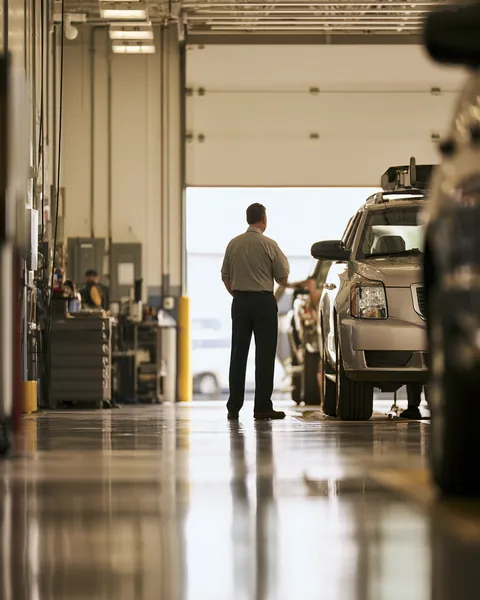
Emissions & Inspection Repair Loans
Fixes needed to pass a state safety or smog check.
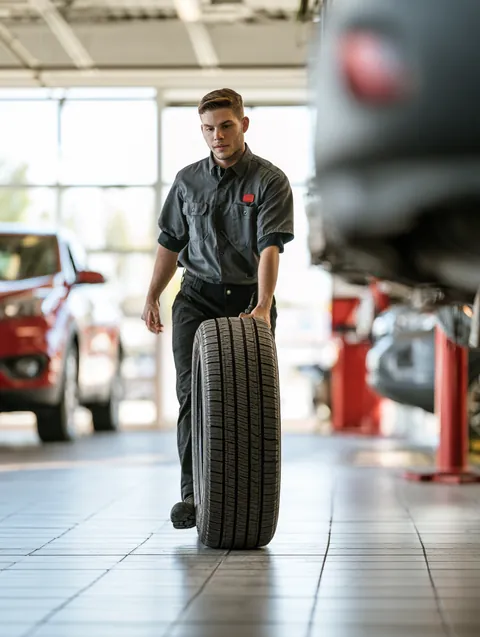
New tires, alignments, pads, rotors and brake jobs.
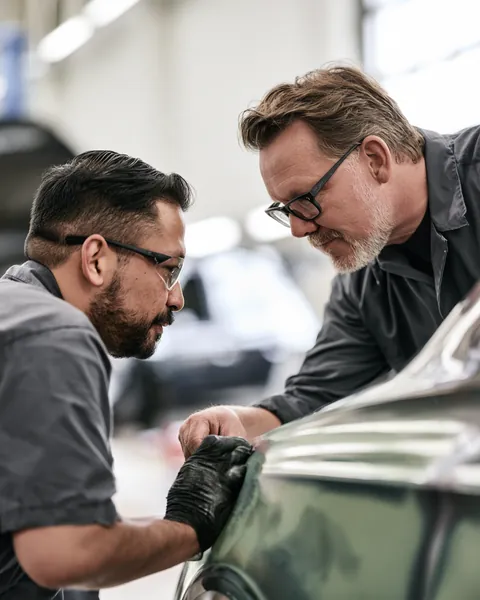
Body work, bumpers, dents and paint after a crash.
A car problem rarely arrives at a convenient moment. The check-engine light comes on the week rent is due, a tire shop says your front pads are down to metal, or an insurance renewal notice lands with a number bigger than last term. Auto Approve Loans exists for exactly those moments. We are not a lender. We are a free connecting service: you fill out one short request, and it may be shared with participating lenders in our network who offer personal loans for car-related expenses. Each lender reviews your information, decides whether to make an offer, and sets the APR, term and fees. Not every applicant is approved, and nothing about the brand name means approval is automatic.
This page explains how the process works, which car costs a personal loan can reasonably cover, what borrowing typically costs, who tends to qualify, and when you might be better off not borrowing at all. The goal is simple: help you fix the car and keep your budget in one piece.
How Auto Approve Loans works in three steps
Auto Approve Loans works in three steps: you describe the car expense and your finances in one request, participating lenders review it, and you compare any offers you receive before deciding whether to accept one.
Step 1: Tell us what the car needs
The request asks for the amount you want (anywhere from $500 to $5,000), what the money is for, and basic details such as your name, address, income, employment and bank account type. Having your repair estimate or insurance bill in front of you helps you ask for the right amount instead of guessing high.
Step 2: Lenders in our network review your request
Your request may be shared with participating lenders whose criteria appear to fit your profile. Many lenders start with a soft credit inquiry that does not affect your score, but some run a hard credit check before a final offer. Each lender uses its own underwriting rules, so one lender may decline while another makes an offer.
Step 3: Review any offer and decide
If a lender makes an offer, you see the amount, APR, monthly payment, term and any fees before you sign anything. You are never obligated to accept. If you do accept and complete the lender's verification, some lenders can send funds as soon as the next business day, though timing depends on the lender and your bank.
Car costs a personal loan from Auto Approve can help cover
A personal loan arranged through Auto Approve is meant for everyday car costs that usually stay under $5,000: mechanical repairs, insurance premiums and deductibles, inspection fixes, tires and brakes, and collision or body work.
Mechanical repairs. Alternators, starters, water pumps, AC compressors, timing belts and transmission work are the classic surprise bills. An alternator typically runs about $500 to $1,000, while transmission repair often lands between $1,500 and $3,500. Our guide to auto repair loans for engine and transmission work walks through the most common repairs and how to get solid estimates first.
Car insurance. A six-month premium can vary enormously by state and driving record, and typical full-coverage annual premiums are well over $1,500. After a claim, a deductible of $500 or $1,000 is common. Read more about car insurance loans for premiums and deductibles before you let a policy lapse.
Inspection and emissions repairs. A failed state inspection can mean an oxygen sensor ($200 to $500), an evap leak repair ($150 to $650), or a catalytic converter ($1,000 to $2,500), all on a deadline tied to registration. Our page on emissions and inspection repair loans explains the usual fixes and re-test windows.
Tires and brakes. A set of four tires installed usually costs about $500 to $1,200, or up to roughly $1,500 for an SUV or truck, and a full brake job across both axles is commonly $500 to $1,200. These are safety repairs that should not wait, which is why we cover tire and brake loans in detail.
Collision and body repair. Minor bumper or dent repair often runs $300 to $1,500 and a panel repaint about $400 to $1,000. If you are paying a deductible or covering a small accident without a claim, see our guide to collision repair loans.
What we do not cover matters too. Auto Approve Loans does not help with buying a vehicle, refinancing an existing car loan, or anything unrelated to keeping your current car on the road.

Typical personal loan amounts by car repair
Typical personal loan amounts for car repairs range from about $500 for a battery or brake pads to $4,000 or more for a transmission rebuild, so matching the request to a written estimate keeps borrowing costs as low as possible.
| Car expense | Typical cost range | Common request |
|---|---|---|
| Battery replacement | About $150 to $350 | $500 |
| Brake pads and rotors, one axle | About $250 to $600 | $500 to $1,000 |
| Four new tires installed plus alignment | About $600 to $1,400 | $1,000 to $1,500 |
| Alternator | About $500 to $1,000 | $1,000 |
| Collision deductible | Commonly $500 or $1,000 | $500 to $1,000 |
| Catalytic converter | About $1,000 to $2,500 | $1,500 to $2,500 |
| Transmission repair | About $1,500 to $3,500 | $2,000 to $4,000 |
| Transmission rebuild | Up to about $4,500 | $4,000 to $5,000 |
Every figure above is an estimate. Labor rates differ between a dealership and an independent shop, parts prices differ between original equipment and aftermarket parts, and regional costs vary. Borrow the amount on the written estimate plus a small buffer for taxes and shop fees, not a round number that feels comfortable. Each extra hundred dollars borrowed is a hundred dollars you repay with interest.
Personal loan rates and a representative example
Personal loan APRs for car expenses typically range from about 6% to 35.99%, depending on credit, income, state and lender, with repayment terms usually between 3 and 36 months.
Your rate is set entirely by the lender that makes the offer. Borrowers with strong credit and low existing debt tend to see offers near the bottom of the range, while thinner or damaged credit files see higher APRs. Shorter terms mean bigger monthly payments but less total interest; longer terms do the opposite.
Representative example: a $2,000 personal loan repaid over 12 months at 24% APR would cost about $189.12 per month, or $2,269.43 in total ($269.43 in interest). This is an estimate; your actual rate and terms are set by the lender.
To see how a smaller amount behaves, a $1,000 personal loan at 24% APR over 12 months works out to roughly $94.56 a month and about $134.72 in total interest, while the same loan at 12% APR costs about $88.85 a month and $66.19 in interest. Our full breakdown of personal loan rates for car expenses covers fees, APR versus interest rate, and how to compare offers side by side.
Who can qualify for a car expense personal loan
Most lenders in our network require applicants to be at least 18, live in the US, have verifiable income, hold an active checking account, and provide a valid ID, email address and phone number.
Beyond those basics, lenders look at credit history, how much of your monthly income already goes to debt, and how stable your income is. Fair or bad credit does not automatically rule you out, but it usually means higher APRs, smaller offers, or a request for extra documents. Availability also varies by state because lending laws differ. The full checklist, including the documents to have ready, is on our loan eligibility and requirements page.
Why use Auto Approve instead of applying lender by lender
Using Auto Approve saves the time of filling out separate applications at multiple lenders, because one request can reach several participating lenders whose criteria may fit your situation.
Going lender by lender means retyping the same income, address and employment details again and again, often while your car sits at the shop accruing storage fees. A single request lets lenders come to you. It also helps you compare. When two or three offers arrive for the same amount, differences in APR, fees and term become obvious in a way they never are when you accept the first offer you see.
A few honest caveats. Our network does not include every lender in the country, so it is reasonable to also check a local credit union. Using the service is free for borrowers; we may be compensated by lenders and partners, which is explained in our advertiser disclosure. And a match is not a promise: auto loan approval for repair costs always depends on each lender's review, not on us.
How Auto Approve protects your information
Auto Approve protects your information by encrypting the request in transit, sharing it only with participating lenders and partners for the purpose of matching, and never selling a borrower's request for unrelated marketing.
A loan request includes sensitive data, so treat it with care on your side too. Submit it from a private device and a secure connection, not public Wi-Fi at the repair shop. Be wary of anyone who calls claiming to be from a lender and asks for an upfront fee to release a loan; legitimate lenders deduct any origination fee from the loan itself or add it to the balance and disclose it in writing. You can ask us to stop contacting you at any time, and our privacy policy describes your choices in detail.
When a personal loan is not the right fix
A personal loan is not the right fix when a cheaper option exists, such as an interest-free shop payment plan, an insurance claim that covers the damage, emergency savings, or a second estimate that lowers the bill.
- Get a second estimate. Quotes for the same repair can differ by hundreds of dollars. Ask for an itemized estimate showing parts, labor hours and the shop's hourly rate.
- Ask about shop financing. Some repair shops and tire stores offer short promotional payment plans. Read the terms carefully, because deferred-interest plans can charge all the back interest if the balance is not paid in time.
- Check your coverage. Collision, comprehensive, roadside assistance and some extended warranties can cover more than drivers expect. Call your insurer before borrowing for damage.
- Use savings if you can. Paying cash costs nothing in interest. Even covering part of the bill from savings shrinks the loan.
- Prioritize safety repairs. Brakes, tires and steering should come first; cosmetic work can usually wait until you have saved for it.
Borrowing makes the most sense when the car is essential for work or family, the repair is urgent, and the monthly payment fits your budget with room to spare. If the payment would only fit by skipping other bills, it is worth pausing.
What Auto Approve reviews say about the experience
Auto Approve reviews from borrowers average 4.6 out of 5 from 4,320 ratings, with most praising the short request and quick responses, and some noting high APR offers or declines when credit was limited.
We think reading the critical comments is as useful as reading the praise. Drivers with fair credit sometimes mention that the first offer carried a higher APR than they hoped, and a few describe funding that took an extra day because of their bank. Those comments are a realistic picture of how personal loans work. You can read 36 illustrative borrower stories and the full rating breakdown on our Auto Approve Loans review page, which has served more than 48,000 customers.
How to get an approved auto repair estimate before you borrow
An approved auto repair estimate, meaning a written, itemized quote you have reviewed and agreed to, is the best starting point for a loan request because it tells you exactly how much to borrow.
Ask the shop for a written estimate listing each part, the labor hours, the hourly rate, diagnostic charges and taxes. Ask which repairs are urgent and which can wait a few months. For collision work, use a certified body shop from your insurer's list or one you trust, and get the insurer's estimate in writing so you know your share before applying. For inspection failures, keep the failed test report, since it lists the codes and items that must be fixed before a re-test.
Once you have the number, request that amount or slightly more to cover tax. A focused request also reads better to lenders, because a clear purpose and a realistic amount relative to your income is easier to evaluate.
Reading a personal loan offer before you accept
Reading a personal loan offer carefully means checking the APR, the total repayment amount, any origination fee, the monthly payment date, and whether there is a prepayment penalty before you sign.
- APR, not just the interest rate. APR includes certain fees, so it is the better number for comparing offers.
- Origination fee. Some lenders charge a percentage of the loan, often deducted before the money reaches you. If you need $1,500 at the shop, make sure the amount you actually receive covers it.
- Total cost. Multiply the monthly payment by the number of months to see what you will repay in full.
- Payment date and autopay. Pick a due date that falls after your paycheck lands. Some lenders offer a small autopay discount.
- Late fees and prepayment. Know what happens if a payment is late and confirm you can pay the loan off early without a penalty.
Borrowing responsibly with a car repair loan
Borrowing responsibly with a car repair loan means borrowing only what the repair costs, choosing the shortest term with a payment you can comfortably afford, and setting up reminders or autopay so no payment is missed.
A good rule of thumb is that all of your monthly debt payments, including the new one, should leave enough room for rent, groceries, fuel and a small cushion. Missed payments can lead to late fees and damage your credit, making the next car bill harder to handle. Once the loan is repaid, consider redirecting that same monthly amount into a car fund. Twelve months of setting aside $90 builds more than $1,000, which covers many of the repairs listed above without borrowing at all.
Next steps with Auto Approve Loans
Next steps with Auto Approve Loans are straightforward: get a written estimate or bill, check the basic requirements, and submit one short request to see whether participating lenders can make you an offer.
Submitting a request is free and does not obligate you to accept anything. If no lender makes an offer, you will know quickly and can turn to the alternatives above, such as a shop payment plan or a credit union. If you do receive an offer, take a few minutes to compare it against the figures on this page before you accept. Questions? Reach us at (888) 957-4039 or [email protected]. Auto Approve Loans, 8550 Hillcrest Lane, Suite 159, Lansing, MI 48933.