 Auto Approve Loans
Estimated $500 repayment options
Estimates only. Your actual APR, fees and term are set by the lender and may differ.
A dead battery on a cold morning, a grinding brake pedal or a failed inspection sticker rarely comes with a big price tag, yet it can still land at the worst point in the month. A $500 loan is built for exactly that kind of gap: a small personal loan with a modest, fixed amount you repay in equal monthly installments instead of letting a small repair turn into a missed shift or a towing bill. Auto Approve Loans is a free connecting service, not a lender. You send one short request, it may be shared with participating lenders, and those lenders make every credit decision, including whether to make an offer at all.
This guide explains who usually borrows this amount, which car repairs fit inside $500, what the payments look like as estimates, what lenders check, and when it makes more sense to skip borrowing entirely.
Who Typically Borrows a $500 Loan for Car Costs
A $500 loan is most often requested by working drivers who need one specific repair done quickly and have a steady paycheck, but not enough cash on hand that week to pay the shop in full.
The typical borrower is not in crisis and is not looking for a large personal loan. More often it is a commuter whose car is the only way to get to work, a parent whose minivan will not start on a school morning, or a rideshare driver who cannot earn until the car passes inspection. The repair itself is usually small, but the timing is tight: rent just went out, or the next paycheck lands in nine days and the shop wants payment at pickup.
Other common situations where a personal loan of this size comes up include:
- Recent graduates and early-career workers who have not yet built an emergency fund.
- Households that just paid a large bill, such as an insurance premium or a medical copay, and have a temporary cash dip.
- Gig workers whose income is solid over a month but uneven week to week.
- Drivers with fair credit who want a fixed payoff date instead of adding a balance to a high-rate credit card.
If your repair is larger than this, the $1,000 loan for bigger car repairs page walks through brake jobs, tire sets and alternators.
Car Repairs a $500 Loan Can Usually Cover
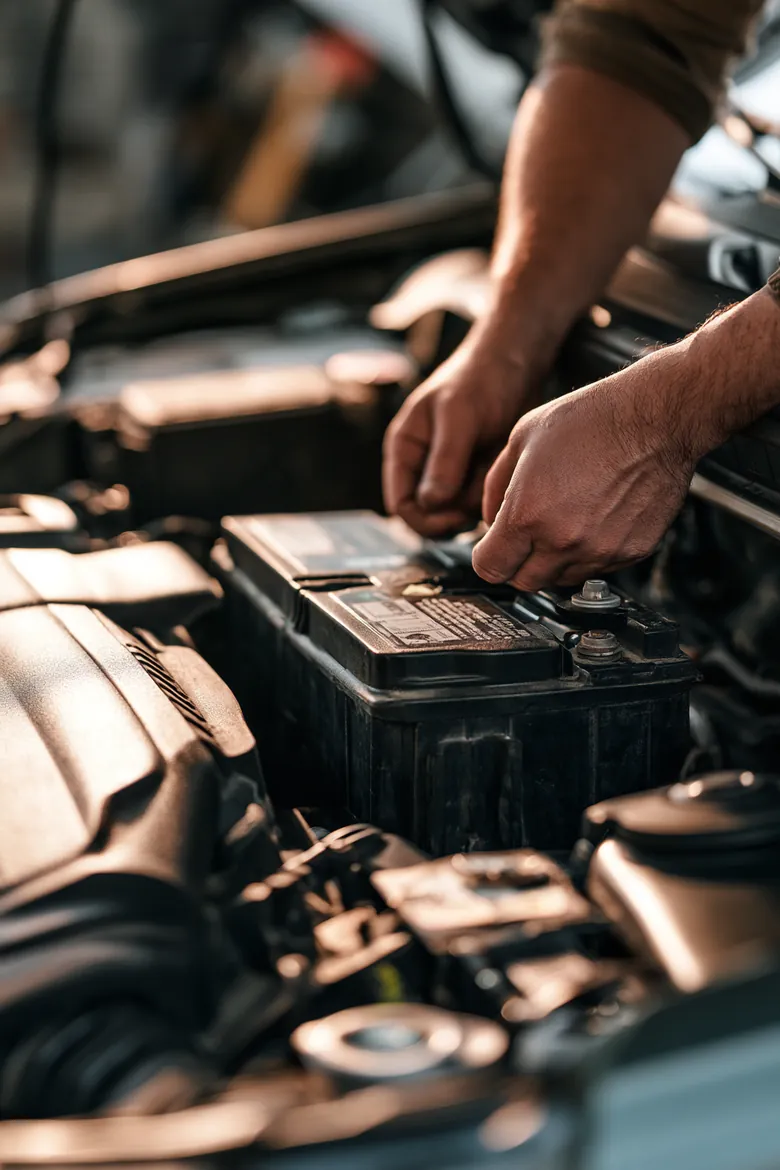
A $500 loan typically covers one smaller repair or a combination of minor fixes, such as a battery replacement, brake pads on one axle, an emissions-related part, a tow plus diagnostic fee, or part of an insurance deductible.
Car battery replacement
A new battery usually costs about $150 to $350 installed, depending on the size, the type (standard flooded or AGM) and whether the car needs the new battery programmed. If the shop finds corroded terminals or a weak alternator output, the extra test or clamp often still fits under $500. A battery is also one of the most common no-start causes, so this is a frequent reason people request a small personal loan.
Brake pads on one axle
Brake pads per axle typically run about $150 to $300. If the rotors are still within spec, a $500 budget comfortably covers pads and a brake fluid service. If the shop says the rotors need replacing too, pads plus rotors per axle usually run about $250 to $600, which can push past this amount. Our tire and brake repair loan guide covers the full range of brake and tire costs.
Inspection and emissions repairs
Many failed inspections come down to inexpensive parts. An oxygen sensor usually costs about $200 to $500, an evap leak repair (often a cracked hose or a bad purge valve) about $150 to $650, and the inspection or emissions test fee itself often $10 to $70. A loose gas cap, a burned-out bulb or a worn wiper can also fail a safety inspection. The emissions and inspection repair loans page explains re-test windows and common failures.
Tow plus diagnostic fee
When a car dies on the road, the first bill is often the tow and the diagnosis, before anyone knows what is wrong. Local tows typically run about $75 to $150, longer ones more, and a diagnostic fee is often $100 to $200. Covering both with a small loan lets you get a clear written estimate before deciding on the actual repair.
Part of an insurance deductible
Collision deductibles are commonly $500 or $1,000. If you carry a $500 deductible, this amount can cover all of it. If your deductible is $1,000 and you have half saved, a personal loan for the other $500 can close the gap so the body shop can release your car on an approved auto insurance claim.
Estimated Payments on a $500 Personal Loan
Estimated monthly payments on a $500 personal loan range from about $44.42 to $89.26, depending on the APR and term a lender offers; shorter terms cost more per month but less in total interest.
The figures below are estimates for illustration. Your actual APR, term and payment are set by the lender after it reviews your request, and they can include fees not shown here.
| APR | Term | Est. monthly payment | Est. total interest |
|---|---|---|---|
| 12% | 12 months | $44.42 | $33.09 |
| 24% | 6 months | $89.26 | $35.58 |
| 24% | 12 months | $47.28 | $67.36 |
| 35.99% | 12 months | $50.23 | $102.74 |
Two patterns stand out. First, at 24% APR, cutting the term from twelve months to six raises the payment from about $47.28 to $89.26 but nearly halves the interest, from about $67.36 to $35.58. Second, the difference between a strong-credit rate and a rate near the top of the typical range is real money even on a small balance: about $33.09 in interest at 12% versus about $102.74 at 35.99% over the same twelve months. You can test your own numbers with the personal loan calculator.
How Much a $500 Loan Really Costs Over Time
The real cost of a $500 loan is the total interest plus any fees, which typically adds about $33 to $103 over a year at common APRs, before an origination fee or late fees are counted.
Personal loans in this range usually carry APRs from about 6% to 35.99%, depending on your credit, income, state and the lender. Because the balance is small, the dollar difference between offers looks minor at first glance, but in percentage terms it is large. Paying $102.74 to borrow $500 for a year means the repair effectively cost you about 20% more than the sticker price.
Watch for these costs on top of interest:
- Origination fee. Some lenders deduct a fee from the personal loan before sending funds. On a small loan, even a flat fee can push the effective cost up sharply. See the origination fee definition for how it affects your APR.
- Late fees. A missed due date can add a fee and may be reported to credit bureaus.
- Prepayment terms. Many lenders allow early payoff of a personal loan without penalty, which is a cheap way to cut interest on a short term. Confirm before you sign.
The full rate picture, including what moves your APR up or down, is on the personal loan rates page.
What Lenders Usually Check Before Making an Offer
Lenders reviewing a small car-repair request usually look at your credit history, income, existing debts, bank account and identity, and each lender weighs those factors differently.
Auto loan approval for repair costs depends entirely on the lender, not on the connecting service. In general, lenders consider:
- Credit history. Payment history and recent late payments often matter more than the score alone. Many lenders work with fair credit, but rates rise as scores drop.
- Income. A verifiable paycheck, benefits or self-employment income shows you can carry the monthly payment.
- Debt-to-income ratio. Lenders compare your monthly debt payments to your income. A $47 payment is small, but it still has to fit.
- Bank account. An active checking account in your name is typically needed to receive funds and set up payments.
- Identity and residency. You must be at least 18 and a US resident, with valid ID.
The complete list, including what to do if you are declined, is on the loan eligibility and requirements page. Not all applicants are approved, and lenders may run a credit check.
Documents to Have Ready for a Small Car-Repair Loan
Having your ID, proof of income, bank details and the written repair estimate ready usually makes a small personal loan request faster and helps lenders verify information without back-and-forth.
- A government-issued photo ID, such as a driver's license or state ID.
- Your Social Security number for identity and credit verification.
- Recent pay stubs, a benefits letter or bank statements showing deposits.
- Routing and account numbers for an active checking account.
- A working email address and phone number.
- The shop's written estimate, so you request the right amount.
The estimate matters more than people expect. Requesting $500 when the job costs $380 means paying interest on money you did not need; requesting $500 when the job is really $640 leaves you short at pickup. An approved auto repair estimate in writing, with parts and labor broken out, is the best guide to the right amount.
How the Request Works Through Auto Approve Loans
The process takes three steps: you fill out one short request, it may be shared with participating lenders, and any lender interested in your profile presents its own offer for you to accept or decline.
- Submit one request. Enter the personal loan amount, the reason (for example, car battery or brakes) and basic income and contact details. The request is free and carries no obligation.
- Lenders review. Your information may be shared with lenders in our network. Each lender decides on its own whether to offer, at what APR and term, and may run a credit check.
- Review and decide. If you receive an offer, read the APR, fees, term and total cost before accepting. If approved, some lenders can send funds as soon as the next business day, though timing also depends on your bank.
Auto Approve Loans does not lend money or make credit decisions; participating lenders do. Reading Auto Approve reviews from past borrowers on the review page can give you a sense of what the experience is like, including the parts people found slow or confusing.
How to Compare $500 Loan Offers
Comparing $500 loan offers comes down to three numbers: the APR, the total amount you will repay, and whether the monthly payment fits your budget without strain after rent and groceries.
- Compare APR, not just the interest rate. On any personal loan, APR includes certain fees, so it is the fairer way to compare. A lower stated rate with a large origination fee can cost more.
- Check the total of payments. Multiply the monthly payment by the number of months. That is what the repair really costs you.
- Prefer the shortest term you can comfortably afford. On $500, the difference between six and twelve months is about $30 in interest at 24% APR.
- Look for flexibility. Autopay discounts, a choice of due date and no prepayment penalty all help.
- Read the late-fee policy. Know the grace period and fee before you sign.
If an offer looks expensive, you are free to decline it. There is no fee for submitting a request and no requirement to accept anything.
Alternatives to Borrowing $500 for a Car Repair
Alternatives to a small personal loan include shop payment plans, asking for a second estimate, using a credit card with a low promotional rate, an insurance claim, or a short-term arrangement with family.
- Shop payment plans. Some repair shops split a bill into two or three payments, sometimes interest-free. Always ask before you borrow.
- A second estimate. Prices for the same job can vary by $100 or more between shops. Independent shops are often cheaper than dealerships for batteries and brakes.
- Parts-only purchase. If you are handy, a battery or wiper swap at home costs only the part. Many parts stores test batteries free.
- Insurance and warranty coverage. Roadside assistance plans often cover towing; a manufacturer or extended warranty may cover the part.
- A low-rate credit card. If you have a card with a 0% promotional APR and can repay before it ends, it may cost less than any personal loan.
- Emergency savings. If you have it, using savings avoids interest altogether. Then rebuild the fund in small, automatic transfers.
When a 500 Dollar Loan Is Not the Right Move
A 500 dollar loan is usually the wrong choice when the repair can safely wait, when cheaper credit is available, or when the new payment would crowd out rent, food or existing debt payments.
Being honest about this protects your budget. Skip borrowing if:
- The repair is cosmetic or can wait until your next paycheck without any safety risk.
- You already struggle to make current loan or card payments on time.
- The car is nearing the end of its life and this repair is one of several large ones coming soon.
- A shop payment plan or a 0% card would cover the same cost for less.
On the other hand, safety repairs such as brakes, a failing battery in winter or a cracked tire usually should not wait. In those cases a small, short-term personal loan with a fixed payment can be a reasonable bridge, as long as you know exactly how you will repay it.
Borrowing a $500 Loan Responsibly
Borrowing responsibly means requesting only what the written estimate requires, choosing the shortest affordable term, setting up autopay, and planning a small savings habit so the next repair does not need a loan.
- Borrow the estimate, not a round number. If the job is $410, see whether the lender allows that amount.
- Map the payment to your pay schedule. Pick a due date a few days after your paycheck lands.
- Turn on autopay. Most personal loans allow it, and it reduces the chance of a late fee, and some lenders offer a small rate discount for it.
- Pay extra when you can. If the loan has no prepayment penalty, an extra $20 a month shortens it.
- Start a car fund. Even $25 a paycheck builds a $500 cushion in about ten months, which covers the next battery or brake job.
Next Steps for Your Car Repair
The best next step is to get a written estimate, compare it with one other shop, decide whether a payment plan or savings could cover it, and only then submit a request for the exact amount.
If you decide a small personal loan is right, submitting a request through Auto Approve takes a few minutes. Lenders in the network review it, and you can compare any offers side by side before choosing. If your repair turns out to be larger, such as a full brake job or a set of tires, the $1,000 page covers those cases. Whatever you choose, keep the repair receipt and your loan agreement together so you always know what you owe and what was done to the car.
Frequently Asked Questions
Can a $500 loan cover a car battery and the installation labor?
In most cases, yes. A replacement car battery typically runs about $150 to $350 installed, so a $500 loan usually leaves room for a charging-system test or a new terminal clamp. Some newer vehicles need the battery registered with the computer, which can add labor. Ask the shop for an all-in quote before you request funds so you borrow only what the job needs.
Is it worth borrowing just $500 for brake pads?
Borrowing for brake pads can make sense when the pads are worn to the metal and you have no savings to cover the bill, because driving on bad brakes risks rotor damage and a much larger repair. Pads on one axle usually cost about $150 to $300. Compare the total interest on a short term against a shop payment plan before you decide.
What is the shortest repayment term for a 500 dollar loan?
Terms on small personal loans usually start around three to six months, though the minimum depends on the lender and your state. A shorter term raises the monthly payment but cuts total interest. As an estimate, $500 at 24% APR over six months costs about $89.26 per month and roughly $35.58 in interest, while twelve months costs about $67.36 in interest.
Will requesting a $500 loan affect my credit score?
Submitting a request to see if you match with lenders often starts with a soft credit check, which does not affect your score, but each lender sets its own process. If you accept an offer and move forward, the lender will usually run a hard credit check, which can lower your score by a few points for a short time.