 Auto Approve Loans
A car repair rarely waits until your credit is in good shape. If your score is low, you may still have options. Auto Approve Loans is a free connecting service, not a lender: you submit one short request, and participating lenders in our network decide whether to make an offer, what rate to charge and what terms to set. Some of those lenders work with borrowers who have fair or poor credit, but nobody can promise approval, and the cost of borrowing is usually higher when credit is weak.
In nine years at a dealership service desk, I watched plenty of customers with damaged credit get their cars fixed. The ones who came out ahead were not the ones who found the "easiest" loan. They were the ones who knew exactly what the repair should cost, borrowed only what they needed, and picked a payment they could actually keep up with. This guide walks through how to do the same.
Can You Get a Car Repair Loan With Bad Credit?
Many borrowers with bad credit can get a car repair loan in the form of a personal loan, but approval depends on income, existing debts and recent payment history, and the APR offered is usually toward the higher end of the market.
Auto Approve Loans hears from many drivers who are unsure what counts as bad credit. Bad credit generally means a FICO-style score below the high 500s or low 600s, though every lender draws its own line. A low score tells a lender you have had trouble with payments, carry high balances, or have a thin credit file. It does not automatically end the conversation. Many lenders that offer personal loans for car expenses look at the full picture: how much you earn, how stable that income is, how much of it already goes to other debts, and whether your recent months show on-time payments even if older accounts do not.
What changes with bad credit is mostly the price and size of the personal loan. Personal loan APRs in the $500 to $5,000 range typically run from about 6% to 35.99%, and borrowers with low scores tend to see offers near the top of that range. Lenders may also cap the amount they will lend, so a request for $4,000 might come back as an offer for $1,500, or not at all.
What Lenders Look At Besides Your Credit Score
Lenders reviewing a car repair loan request usually weigh income, debt-to-income ratio, employment stability, bank account history and the requested amount alongside your credit score, and a strong showing in those areas can offset a weak score.
- Income. Regular income you can document, whether from wages, self-employment or benefits, shows you can make a monthly payment.
- Debt-to-income ratio. Your monthly debt payments divided by your gross monthly income. A lower debt-to-income ratio leaves more room for a new payment.
- Recent payment history. Twelve months of on-time payments after an older rough patch can matter more than the old marks.
- Bank account activity. Some lenders review deposits and balances to confirm income and spot frequent overdrafts.
- Loan amount and term. A smaller amount repaid over a shorter term is less risk for the lender and often easier to approve.
From the service desk side, I can add one more factor that helps indirectly: a clear, written estimate. When you know the repair costs $1,180 rather than "somewhere around a grand or two," you can request a specific amount, and a specific, modest request is easier for a lender to evaluate.
How Much a Bad Credit Repair Loan Can Cost
A bad credit personal loan for car repair typically costs more in interest than the same loan at a lower APR, and the difference grows with the amount borrowed and the length of the term, so comparing total cost matters.
Here is what that looks like with real math. All figures below are estimates; your actual rate and terms are set by the lender.
| Amount | APR | Est. monthly payment | Est. total interest |
|---|---|---|---|
| $1,000 | 12% | $88.85 | $66.19 |
| $1,000 | 24% | $94.56 | $134.72 |
| $1,000 | 35.99% | $100.46 | $205.49 |
| $1,500 | 12% | $133.27 | $99.28 |
| $1,500 | 24% | $141.84 | $202.07 |
| $1,500 | 35.99% | $150.69 | $308.23 |
Notice that the monthly payment changes less than you might expect, roughly $12 to $17 a month between 12% and 35.99% on these amounts. The total interest, however, roughly triples. That is why I always tell people to look at the total, not just the payment. You can run your own numbers in our personal loan calculator for repair costs before you submit anything.
How to Shrink the Amount You Need Before Borrowing
Shrinking the repair bill before you borrow is the single most effective way to lower the cost of a bad credit personal loan, because every dollar you do not borrow is a dollar that never collects interest.
Ask the shop to rank the repairs
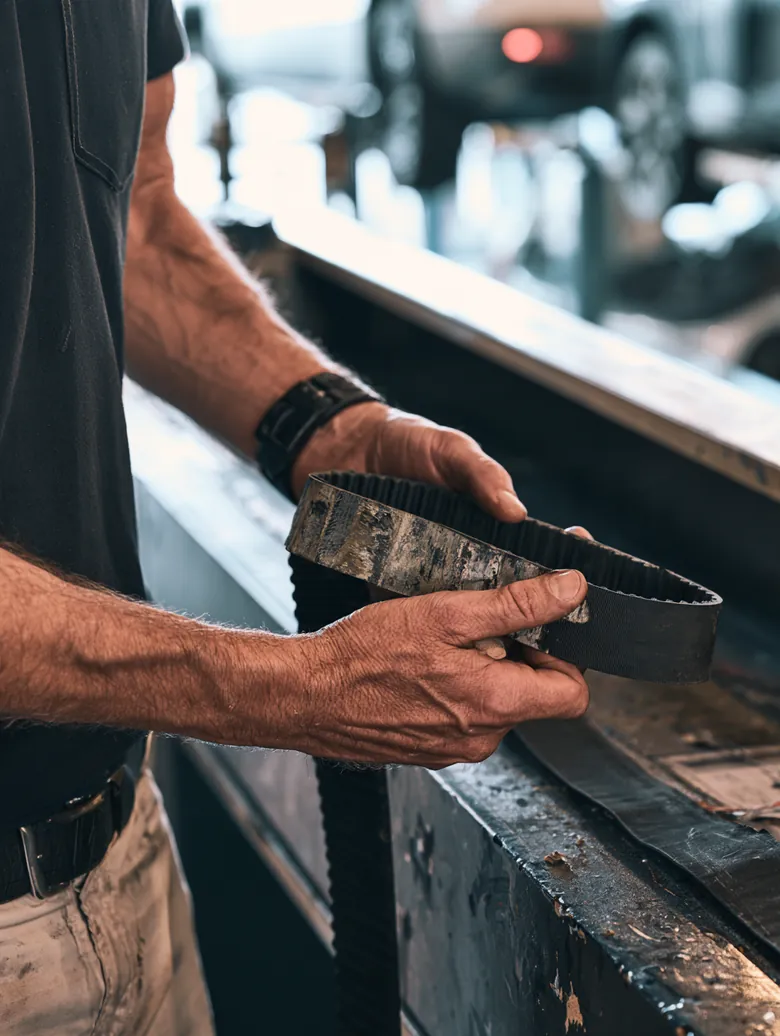
Estimates often bundle urgent work with recommended maintenance. Ask the advisor directly: "Which of these items make the car unsafe or will cause more damage if I wait?" A cracked serpentine belt that drives the water pump is urgent. A cabin air filter is not. On a $1,600 estimate, separating the must-do items from the can-wait items might bring the immediate bill down to $900 or $1,000.
Get a second estimate for big jobs
For anything over about $1,000, a second opinion is worth an hour of your time. Labor rates vary a lot between dealerships, independent shops and chains. An alternator that is quoted at $1,000 at one shop may be $600 at another using a quality aftermarket part.
Check warranties and recalls
Before paying for anything, check whether the part is under a powertrain or extended warranty, whether a recall covers it, and whether a recent repair on the same part is still under the shop's own warranty. I have seen customers almost pay for a second water pump that was still covered from six months earlier.
Use what you have
If you have $300 saved, use it and borrow the rest. Borrowing $700 instead of $1,000 at 35.99% for 12 months saves roughly $60 in interest and lowers the payment by about $30 a month.
Where an Auto Approve Request Fits for Bad Credit Borrowers
The Auto Approve request lets you describe your repair cost and finances once, and participating lenders in our network decide whether to respond with an offer, so you can see options without filling out separate forms everywhere.
The request is free and does not obligate you to accept an offer. Some lenders may start with a soft credit check to show possible terms, and a lender may run a hard credit check before final approval. Not every applicant receives an offer, and borrowers with bad credit should expect fewer offers and higher rates than borrowers with strong credit. If approved, some lenders can send funds as soon as the next business day, but the timing depends on the lender and your bank.
Auto Approve does not set rates or terms. When an offer arrives, read it as carefully as you read the repair estimate. Check the APR, the origination fee if any, the term, the late fee, and whether the lender charges a prepayment penalty. Auto loan approval for repair costs depends on the lender's own criteria, so if one lender declines you, another may still respond, or you may need to adjust the amount.
Bad Credit Loan Options Compared to Other Ways to Pay
Bad credit borrowers have several ways to pay for repairs besides personal loans, including shop financing, credit cards, help from family and payment plans, and each has trade-offs in cost and risk.
- Shop payment plans. Some repair shops partner with financing companies or offer in-house plans. Promotional deferred-interest plans can be inexpensive if you pay in full on time, but costly if you do not.
- Credit cards. If you have available credit, a card can work for a small repair you can pay off in a month or two. Card APRs for borrowers with lower scores are often high, and a revolving balance can linger.
- Family or friends. A clearly written repayment plan protects both sides. This can be the cheapest option, but it carries relationship risk.
- Community or employer help. Some employers offer paycheck advances or hardship funds, and some local charities help with repairs that keep people working.
- High-cost short-term loans. Title loans and similar products can carry triple-digit APRs and put your car at risk. They are worth avoiding.
A fixed-rate personal loan has one advantage many of these lack: a set payment and an end date. You know the loan will be gone in 12 or 18 months if you make each payment. Our comparison of personal loans and credit cards for car repairs goes deeper into that trade-off.
Steps to Improve Your Chances of Approval
Improving your chances of personal loan approval with bad credit comes down to requesting a realistic amount, documenting steady income, reducing other debts where possible and correcting errors on your credit report before you apply.
- Pull your credit reports. You can get free reports from the three major bureaus. Dispute any errors, such as a paid account still showing a balance.
- Pay down a card balance if you can. Lowering utilization on a maxed-out card can lift a score fairly quickly.
- Gather documents. Have recent pay stubs, bank statements, a valid ID and the written repair estimate ready.
- Request only what the repair needs. A $1,200 request backed by a $1,200 estimate reads better than a round $3,000.
- Choose a term you can sustain. A shorter term costs less overall, but only if the payment fits your budget every month.
- Consider a co-signer carefully. A co-signer with stronger credit may help, but they take on real responsibility for your debt.
When Not to Borrow for a Car Repair
Taking a personal loan for a car repair is a poor choice when the repair costs more than the car is worth, when the payment would strain your essentials, or when a cheaper option like a warranty or insurance claim is available.
From the service desk, the hardest conversations were about older cars needing big repairs. If your car is worth $2,500 and the transmission repair is $3,500, financing that repair may not make sense. Putting the money toward a different, more reliable car, or toward a cheaper used transmission, could be the better use of the dollars.
Likewise, if adding a $150 monthly payment would mean falling behind on rent or utilities, the loan could create a bigger problem than the broken car. Late payments add late fees and can push your credit score lower, making the next emergency harder to handle. In those cases, ask the shop about a partial repair that makes the car safe, look for community assistance, or consider other transportation for a few weeks while you save.
Real-World Scenarios With Bad Credit
Real-world repair scenarios show how the same bad credit situation can lead to very different costs depending on the amount borrowed, the term chosen and whether the borrower trimmed the estimate first.
The $1,000 brake and tire fix
A driver with a score in the 560s needs front pads and rotors ($450) and two tires ($300), plus an alignment ($150), for a total near $900. She has $100 saved and requests $800 after asking for an approved auto repair estimate in writing. At 35.99% for 12 months, a $1,000 loan would cost about $100.46 a month; borrowing less brings that payment and the interest down further.
The $1,500 alternator and battery
A rideshare driver's alternator fails and takes the battery with it, for an estimate of about $1,450. Because the car is his income, waiting is not an option. A $1,500 personal loan at 24% over 12 months would run about $141.84 a month and roughly $202.07 in interest. He picks the 12-month term over 18 months because it saves around $100 in interest and fits his weekly earnings.
The $3,500 transmission on an older car
A driver with a 14-year-old sedan worth about $3,000 gets a $3,500 transmission estimate. After talking it through, she decides not to borrow for the repair. She sells the car as-is and uses the proceeds toward a more reliable used car, avoiding a loan larger than the car's value.
Common Mistakes Bad Credit Borrowers Make
Common personal loan mistakes bad credit borrowers make include borrowing more than the repair costs, choosing the longest term to get the lowest payment, skipping the fine print, and turning to high-cost lenders out of urgency.
The longest term is tempting because it makes the payment look small. A $1,000 loan at 24% over 18 months is about $66.70 a month, compared with $94.56 over 12 months. The 18-month version, though, costs about $200.64 in interest versus $134.72. If the shorter payment fits your budget, it is usually the better deal.
Another mistake is ignoring fees. An origination fee is often deducted from the amount you receive, so a $1,000 loan with a 5% fee may deliver only $950 to your account. If the repair costs $1,000, you would come up short at the counter. Ask how fees are handled before you accept. Finally, read Auto Approve reviews and any lender's terms with a clear head rather than in the shop parking lot with the tow truck still idling.
How a Repair Loan Can Help Rebuild Credit
A personal loan for repairs repaid on time can help rebuild credit, because most installment lenders report payments to the credit bureaus, and a record of on-time installment payments is one of the strongest positive signals on a credit report.
This only works if every payment is on time. Setting up autopay, which some lenders reward with an autopay discount, is the simplest safeguard. Pick a due date a few days after your paycheck arrives so the money is always there. After six to twelve months of on-time payments, many borrowers see their scores improve, which can mean better offers the next time a car bill shows up.
For more on how these loans work for everyday mechanical repairs, see our main guide to auto repair loans for brakes, batteries and more. Whatever you decide, whether through Auto Approve or elsewhere, start with a clear estimate, borrow the smallest amount that gets the car safely back on the road, and choose a payment you can keep for the full term.
Frequently Asked Questions
Will a lender look at my income if my credit score is low?
Most lenders do look closely at income when a credit score is low. Steady income from a job, benefits or self-employment shows you can handle a monthly payment. Expect to provide recent pay stubs, bank statements or a benefits letter. Income does not replace credit history, but it can strengthen a borderline request and may help you qualify for a smaller loan amount.
Can a co-signer help me get a car repair loan with bad credit?
Some lenders accept a co-signer, which can improve the chance of approval or lower the rate offered. A co-signer agrees to repay the loan if you do not, and late payments can damage their credit as well as yours. Only ask someone who fully understands that risk, and only borrow an amount you are confident you can repay on schedule.
Is it better to wait and fix my credit before repairing my car?
Waiting makes sense only if the car is safe to drive and the repair is not urgent. Brake, tire, steering and cooling problems usually get worse and more expensive with time. If the car is unsafe or you need it to keep your job, a small, short loan may cost less than lost wages or a larger repair later. Compare both paths in dollars before deciding.
Related Posts

Personal Loan vs Credit Card for Car Repairs: Which Costs Less?
For car repairs you cannot pay off within a month or two, a fixed-rate personal loan usually costs less than…

Can You Use a Personal Loan to Pay a Car Insurance Deductible?
Yes, you can use a personal loan to pay a car insurance deductible, since the money is yours to spend…